Home · Treatments · Laser Hair Reduction
Laser Hair Reduction
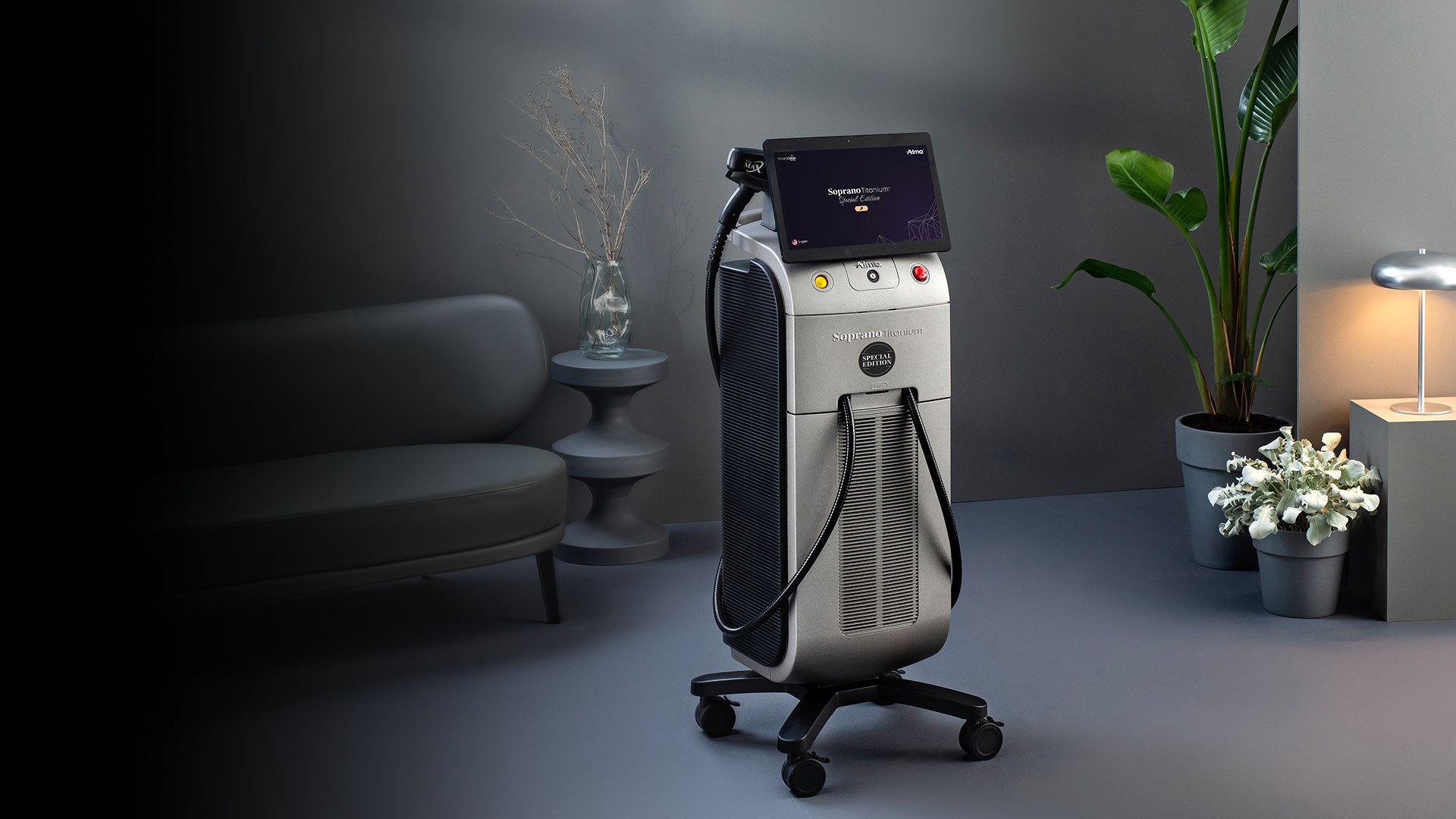
Unwanted hair, retired quietly. Medical-grade laser hair reduction on the Alma Soprano Titanium — three wavelengths in a single pass, dosed to your skin tone and hair type by trained clinicians, and safe for Indian and tanned skin.
Signature programmes
3 optionsFull Body Laser Hair Reduction (Women)
Every area in one considered programme, scheduled around your calendar and your skin.
Full Body Laser Hair Reduction (Men)
Chest to back, tuned for denser, coarser male hair growth.
Full Face
Forehead to jawline in a single session — the most requested starting point.
Face & neck
6 optionsUpper Lip
A precise, quick session for one of the most visible areas.
Chin
Targets stubborn, often hormonally driven regrowth.
Side Locks
Cleans and defines the sideburn line.
Forehead
Tidies the hairline and the brow surround.
Neck
Front or nape — smooth, without razor irritation.
Beard Shaping (Men)
Sharpens the beard line along the cheeks and neck while keeping the beard itself.
Arms & hands
4 optionsUnderarms
Smooth underarms, with fewer ingrown hairs and reduced shadowing over time.
Full Arms
Shoulder to wrist.
Half Arms
Elbow to wrist.
Hands & Fingers
The detail most people forget.
Chest, back & abdomen
4 optionsChest
The full chest, graded to the reduction you want.
Abdomen
The navel line or the full abdomen.
Full Back
Shoulders to waist.
Lower Back
The band beneath the waistline — a common add-on.
Bikini & intimate
2 optionsBikini Line
Along the line only — clean, comfortable, discreet.
Brazilian
Complete intimate-area reduction, performed privately and professionally.
Legs & feet
3 optionsFull Legs
Hip to ankle.
Half Legs
Knee to ankle.
Feet & Toes
Usually paired with legs.
The technology · Alma Soprano Titanium
Three wavelengths, one pass
We chose the Soprano Titanium because it is built for skin like ours — Indian, often tanned, and frequently the kind of skin older lasers were never designed to treat safely.
The shallowest of the three. Strongly absorbed by pigment, so it works on finer, lighter hair near the surface.
The workhorse wavelength — the depth that reaches most terminal hair follicles.
The deepest, and the least absorbed by surface melanin. It is what makes treating deeper, coarser hair on darker skin safe.
Delivered together, not in turns
All three wavelengths fire from a single TRIO applicator in the same pass, so follicles at different depths are treated in one sitting rather than across separate sessions.
SHR — gradual heating, not one hard pulse
Instead of a single high-energy shot, the follicle is brought up to temperature by many rapid low-energy pulses. Less trauma at the surface, the same damage where it matters.
IN-Motion, so nothing is missed
The applicator is swept continuously over the area rather than stamped. Energy spreads evenly, which means no skipped patches and no stacked hot spots.
ICE Plus contact cooling
The tip cools your skin continuously throughout the pass — the single biggest reason the treatment is comfortable rather than something to endure.
Fitzpatrick I–VI, including tanned skin
The low-fluence approach is what makes darker and recently tanned skin treatable. It does not make a patch test optional — we still do one.
A 4 cm² spot, so large areas move quickly
Full legs or a full back are covered in far fewer passes than a small-spot laser, which is what keeps long sessions from becoming an ordeal.
Alma and Soprano Titanium are trademarks of Alma Lasers. We use the platform under normal clinical practice; wavelength and technology details are the manufacturer's published specifications.
The platform · In motion
See the Soprano Titanium
Alma's own film of the platform we use — the applicator, the sweep, and the speed a 4 cm² spot makes possible.

Video © Alma Lasers International, shown via YouTube.
Questions
Asked, and answered
The things worth knowing before you book — answered plainly.
Is it permanent?
Honestly — it is permanent reduction, not permanent removal, and any clinic promising otherwise is overselling. Expect a large and lasting drop in density and thickness. Hormones, PCOS and genetics can wake dormant follicles later, so an occasional maintenance session once or twice a year is normal and not a sign the course failed.
How many sessions will I actually need?
Typically six to ten, spaced four to six weeks apart. The reason is biology, not sales: a laser only affects follicles in their active growth phase, and only a fraction of your hair is in that phase at any one time. Facial and hormonal areas usually need more sessions than legs or underarms.
Does it hurt?
Most people describe it as a warm sensation with the applicator moving over the skin, not the snapping of a rubber band that older lasers are known for. The continuous cooling and the gradual heating method are the reason. It is not anaesthetic — some areas, particularly the upper lip and bikini line, are more sensitive than others.
Is it safe for Indian and darker skin?
Yes, and that is precisely why we chose this platform. Deeper wavelengths and gradual low-energy heating mean the surface melanin absorbs far less of the energy — the mechanism behind burns and post-inflammatory pigmentation on darker skin with older devices. We still patch test every client before starting.
What if I am tanned?
The platform is rated for tanned skin, but we will still assess you in person. If you have had significant recent sun exposure we may adjust your settings or ask you to wait — a short delay is a far better outcome than a pigmentation problem.
How should I prepare?
Shave the area a day before — do not wax, thread, pluck or use hair-removal cream for four weeks beforehand, since the laser needs the root in place to work. Come with clean skin, no deodorant on underarms, and avoid deliberate sun exposure for two weeks either side of a session.
What happens afterwards?
Mild redness and a warm, slightly prickly feeling for a few hours is normal and expected. Avoid hot showers, steam, saunas, swimming pools and the gym for about 24 hours, use sunscreen daily on exposed areas, and expect treated hairs to shed over the following one to three weeks — that shedding is the treatment working, not regrowth.
Can I have it done on the face?
Yes — upper lip, chin, forehead, sideburns and the neck are among our most requested areas. Facial hair is often hormonally driven, so we will ask about your medical history and may suggest investigating the cause alongside treating it.
Is it suitable during pregnancy?
We do not treat during pregnancy. There is no strong evidence of harm, but there is also no good evidence of safety, and pregnancy hormones change hair growth in ways that make results unpredictable. We are happy to plan a course for afterwards.
Do men have this done?
Regularly — chest, back, shoulders, neckline and beard shaping are all common. Beard shaping in particular is about defining a line rather than removing the beard, and is planned carefully with you.
Smooth, considered.
Book a consultation and patch test. We will map your areas, plan your course, and give you an honest timeline.
Book a consultation